


Commercial Bio-Compost Manufacturing
Category

Investment Required
Funding organic processing infrastructure
Projected Return
Secured by local commercial off-take
Overview
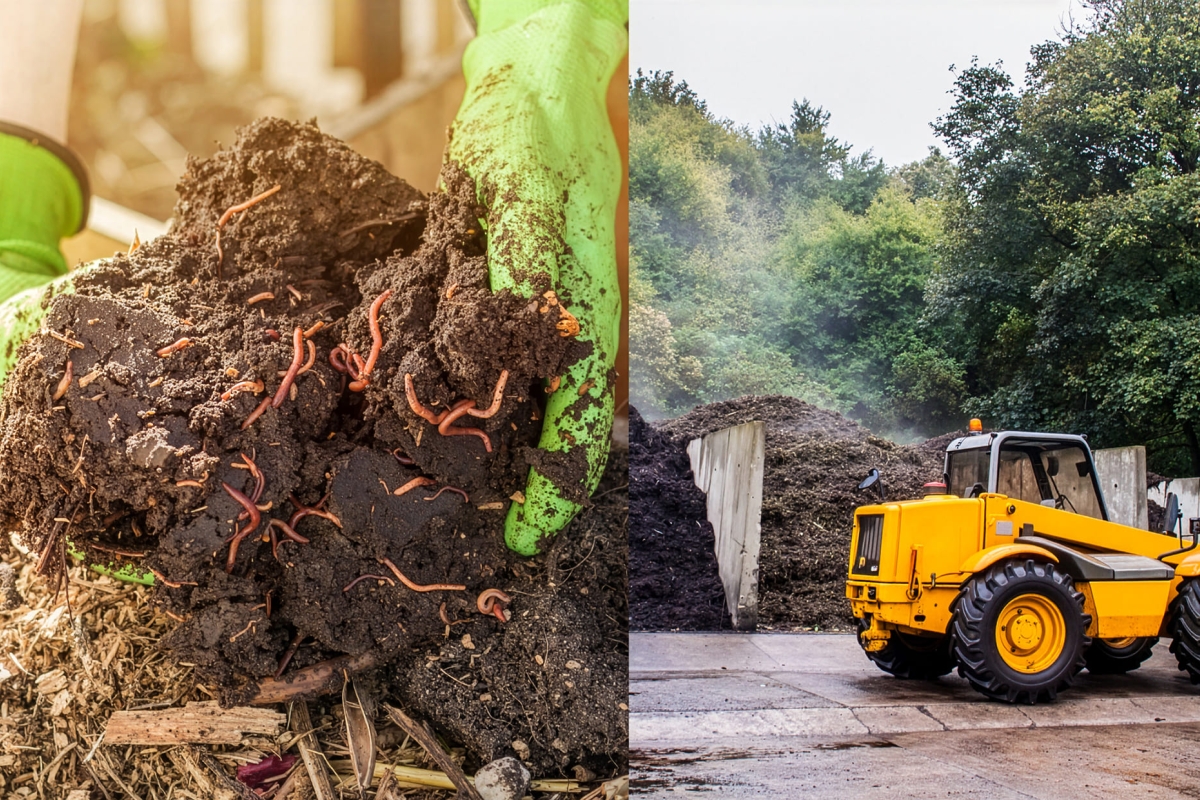
A high-capacity, circular agricultural utility designed to process organic waste and secondary biomass into premium-grade, certified organic bio-fertilizers. Utilizing advanced biological decomposition methodologies mastered by global soil-science experts, this facility converts secondary ecological outputs into a valuable regenerative resource, establishing a lucrative alternative income stream while servicing domestic landscaping and agricultural markets.
Why We Do It
The international expansion of hospitality and residential estate sectors drives a high, continuous demand for top-tier soil amendments, which are traditionally met via expensive, chemically destructive foreign imports. We bridge this commercial gap by replacing synthetic inputs with high-nutrient, territory-produced compost, retaining financial value within the local economy while systematically restoring degraded island soils.
How It Works
The hub establishes a highly efficient bio-refining matrix that converts raw organic byproducts into standardized, market-ready soil infrastructure.
Sourcing
Raw input material is reclaimed directly from agricultural bypass flows, regional biomass collections, and the processed outputs of upstream circular sanitation networks.
Access
Commercial agricultural enterprises, municipal developers, and private smallholders gain direct wholesale access to bulk, premium biological inputs.
Distribution
High-grade compost lines are packaged and shipped directly to professional landscapers, private villa operators, and luxury resort maintenance teams or distributed for localized internal consumption
Impact Indicators
Production Capacity
600 Tons
Annual organic fertilizer output
Soil Bio-Security
100%
Certified organic biological input
Import Substitution
-40%
Reduced chemical fertilizer reliance
Scientific & Community Governance
The Composting Hub operates under an equitable community framework, ensuring that production revenue, wholesale distribution rights, and localized trade margins are governed directly alongside regional agricultural councils.
Simultaneously, The Lab monitors microbial diversity, carbon-to-nitrogen ratios, and thermal pasteurization levels throughout the maturation cycle. This rigorous scientific verification ensures all finished compost blocks command maximum premium authority across the domestic hospitality and farming sectors.

Capitalize on Bio-Soil Infrastructures
Partner with Flavor Islands to scale decentralized bio-refinery networks and capture high-margin commercial demand within the Pacific's premier hospitality sectors